
Somewhere in your state’s education code, there’s a good chance you’ll find a line requiring digital literacy or computer science instruction. For example, twenty states now have K-12 computer science mandates that reach all the way down to kindergarten.
Knowing the requirement exists is one thing. Showing which lessons meet it is another, and that part usually lands on you: the person making the case to a principal, the district office, or a board meeting.
So we’ve done that part for you.
What TypeTastic aligns with
Our lessons in keyboarding, digital citizenship, digital literacy, AI literacy, and computer science are mapped to:
- Common Core, whose ELA writing standards name digital writing and keyboarding outright. From first grade, students use digital tools “to produce and publish writing.” By third grade, the standard adds “using keyboarding skills” in exactly those words. Our Common Core document maps W.1.6 through W.8.6 to the units that build them.
- CSTA, the Computer Science Teachers Association standards
- ISTE, the International Society for Technology in Education standards
- E-Rate and CIPA internet safety instruction requirements
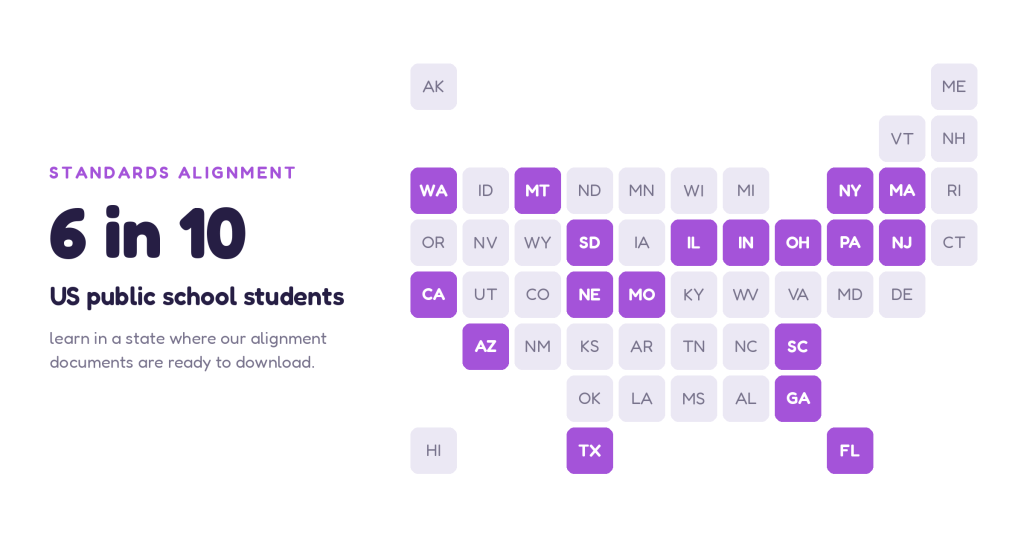
Plus state standards. In most places those are the ones that carry the most weight, and they differ from one state to the next. We publish documents covering the computer science and digital literacy standards for Arizona, California, Florida, Georgia, Illinois, Indiana, Massachusetts, Missouri, Montana, Nebraska, New Jersey, New York, Ohio, Pennsylvania, South Carolina, South Dakota, Texas, and Washington. We’re adding more all the time.
Find your state’s alignment documents
What you get
PDFs organized by state, adoption year, and grade band or grade level, depending on how your state structures its standards. So you’re working from the version your district actually follows.
They’re built to be forwarded. Drop a table into a slide, paste the standard codes into a curriculum map, or send the file to whoever asked.
Three moments these earn their keep
Building a curriculum map. When you’re documenting what your school teaches and where, coverage gaps are easier to spot with the codes in front of you.
Making a purchase case. Standards alignment is usually the first thing the district office or a business office checks. Having it ready in the format they expect saves a round trip.
Answering the coverage question. When someone asks whether your school is meeting its computer science or digital literacy obligations, that’s a question about coverage, and coverage is exactly what these documents show.
Find your standards
Whether you’re mapping a single grade, planning a year, or building a case for your district, the documents are ready.
Explore TypeTastic Standards Alignment
If your state isn’t listed yet, tell us. Knowing which standards our schools are working from is how we decide what to map next, and the sooner the paperwork is settled, the sooner you can get back to the part that matters: students building the skills the standards are there to protect.

